0000-00
HOWO Dump Truck 6x4 vs 8x4: Payload and Performance Analysis
Selecting the optimal chassis layout for heavy-duty earthmoving, infrastructure development, and mining logistics requires a thorough investigation into mechanical metrics. Fleet procurement managers consistently evaluate the operational trade-offs of the HOWO dump truck 6x4 vs 8x4 configurations to balance upfront acquisition costs with long-term payload efficiency. Both vehicle types, engineered by SINOTRUK and systematically supplied by ZW Vehicle Group, fulfill distinctive operational roles across international transportation sectors. This technical analysis breaks down the core distinctions in payload capacity, chassis engineering, and site performance to guide your next fleet expansion decision.
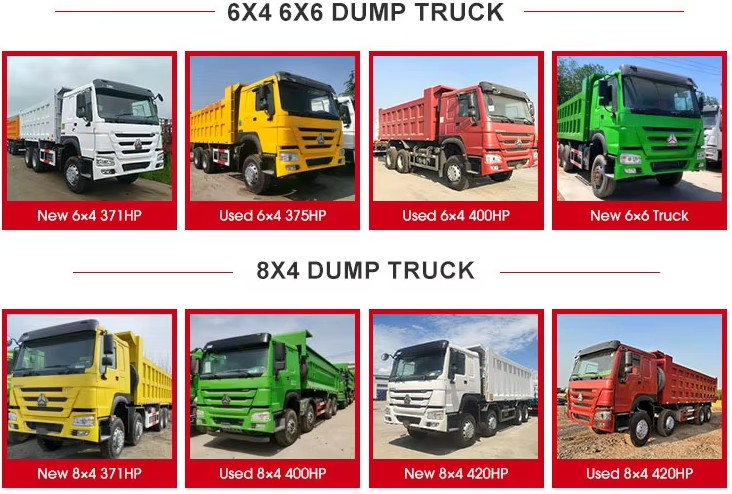
HOWO dump truck 6x4 vs 8x4 axle configuration comparison
1. Chassis Architecture and Axle Load Distribution
The foundational distinction between these two heavy-duty workhorses lies in the arrangement of the running gear and the resultant legal axle-weight compliance. The 6x4 platform utilizes a single steer front axle coupled with a dual-drive rear tandem axle assembly. This design provides an ultra-reliable, conventional layout optimized for standard engineering operations where overall vehicle length must remain contained.
The 8x4 Dual-Steer Engineering Advantage
Conversely, the 8x4 platform integrates two steering front axles alongside the dual-drive rear tandem axles. This extra front axle completely alters the structural dynamic of the vehicle. By spreading the front-end unladen weight across four wheels instead of two, the chassis handles significantly heavier cargo loads without violating strict regional gross vehicle weight (GVW) limitations. For operators managing trans-border logistics corridors, this distribution prevents premature component wear and minimizes road infrastructure impact penalties.
2. Comparative Payload Capacities and Cargo Box Dimensions
When measuring the exact **used HOWO dump truck payload** capabilities, business buyers must look closely at both volumetric capacity and structural limits. The structural differences directly impact the volume of aggregate material, sand, or mineral ore that can be legally and safely transported per cycle.
6x4 Tipper Truck Capacity Specifications
A typical 6x4 HOWO tipper features a cargo box length ranging from 5.4 to 5.6 meters, yielding a volumetric capacity of roughly 15 to 20 cubic meters. Under standard working environments, this configuration comfortably handles a nominal payload of 15 to 25 tons. It serves as an excellent option for moving materials across short to medium distances within municipal construction zones.
8x4 Heavy-Duty Payload Capacity
For large-scale earthmoving operations, the 8x4 variant increases cargo box dimensions up to 7.3 or 7.6 meters in length. This extension expands the available volume up to 25 to 30 cubic meters, matching the wider 6x4 vs 8x4 dump truck specifications criteria for high-density transport. The structural payload threshold scales up to 40 tons, enabling mining operations and heavy bulk haulers to maximize profit margins by moving significantly more material per trip.
3. Power Output and On-Site Performance Metrics
The engine specifications across these platforms are tailored to match their maximum load ratings. The **HOWO tipper truck performance** relies heavily on proven Weichai and SINOTRUK WD615 engine series. While the 6x4 chassis is frequently equipped with engines rated from 290HP to 375HP, the heavier 8x4 chassis often utilizes high-output powertrains generating 375HP to 420HP to maintain adequate power-to-weight ratios under maximum load conditions.
Maneuverability vs. Traction Optimization
Operational environments dictate which configuration yields superior site efficiency. The 6x4 truck features a shorter overall wheelbase, providing a tighter turning radius that allows it to easily navigate cramped urban construction sites, narrow alleys, and tightly winding approach roads. However, when operating in deep mud, soft sand, or steep open-cast mining terrains, the 8x4 chassis provides superior straight-line tracking stability. The dual front steering axles help keep the vehicle grounded, preventing understeer when hauling heavy loads uphill on unpaved surfaces.
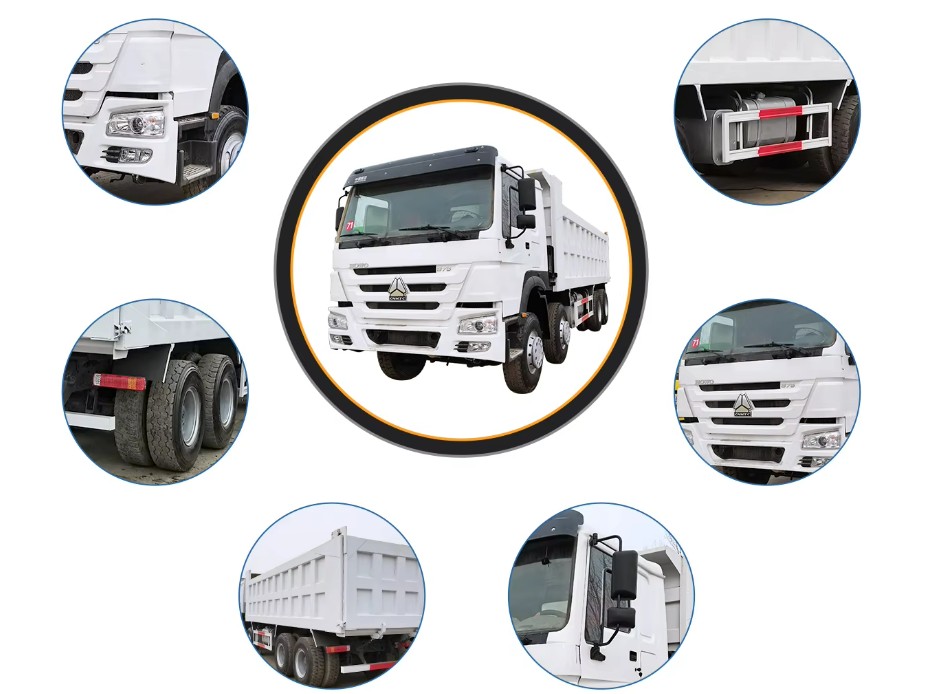
4. Total Cost of Ownership (TCO) and Fuel Efficiency Dynamics
A thorough assessment of any **heavy duty tipper dimensions price** structure must factor in long-term operational expenditures. The 6x4 tipper offers a lighter unladen weight and fewer tires, which naturally translates to reduced rolling resistance and lower fuel consumption when returning empty. Maintenance schedules are also slightly simpler due to having fewer steering link components and brake assemblies.
However, the 8x4 model reverses this financial equation when analyzing cost-per-ton logistics metrics. Because it moves up to 60% more material per haul cycle compared to a 6x4 unit, it reduces the total number of trips required for large projects. This massive reduction in trips saves substantial fuel, cuts down on driver labor hours, and limits overall tire wear per ton of material moved, making the 8x4 highly profitable for high-volume, long-distance bulk hauling.
5. ZW Vehicle Group Refurbishment Standards for Pre-Owned Fleets
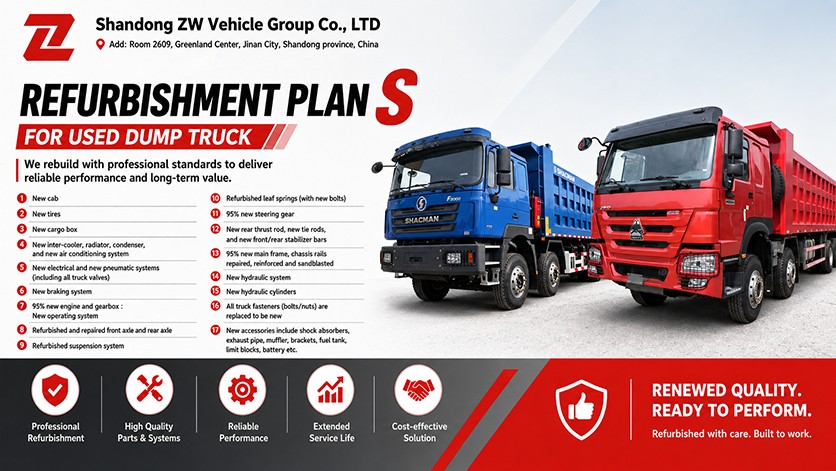
For B2B buyers looking to optimize their capital expenditures, purchasing high-quality refurbished SINOTRUK dump trucks from ZW Vehicle Group offers an exceptional alternative to buying brand-new units. Our factory-level refurbishment facilities in Jinan ensure that every pre-owned truck meets strict international operating standards before export.
Our comprehensive refurbishment process features strict traceability across several key engineering stages:
- Exhaustive engine diagnostic overhauls, including replacing the cylinder barrel and verifying fuel injection timing.
- Complete internal transmission inspections with replacement of any worn gear synchronizers or bearings.
- Chassis structural stress-testing, followed by deep media blasting and industrial-grade anti-corrosion coating.
- Full replacement of all old tires with brand-new, heavy-load 12R22.5 or 12.00R20 steel-belted radial tires.
Complete renewal of the cabin interior, including rewiring the electrical systems and replacing the air suspension driver seating.
Strategic Selection Framework for International Buyers
In summary, choosing between a 6x4 and an 8x4 HOWO dump truck depends entirely on your specific project constraints. If your operations involve navigating tight urban environments, managing shorter haul distances, or working within stricter initial budget limits, the agile 6x4 configuration remains a highly reliable choice. However, if your business focuses on high-volume mining logistics, large-scale bulk earthmoving, or maximizing payload efficiency under strict axle-load regulations, the robust 8x4 platform delivers superior long-term profitability. Partnering with ZW Vehicle Group ensures your fleet receives fully verified, high-performance machinery tailored to your exact regional market demands.
Frequently Asked Questions Regarding HOWO Tipper Configurations
What is the main payload difference between a HOWO 6x4 and an 8x4 dump truck?
The fundamental difference lies in axle load distribution and cargo volume. A standard HOWO 6x4 dump truck typically carries a payload of 15 to 25 tons with a 15-20 cubic meter box, whereas the reinforced 8x4 variant handles 25 to 40 tons with cargo box volumes scaling up to 30 cubic meters.
Which configuration is better for tight construction sites, the 6x4 or 8x4?
The HOWO 6x4 configuration provides a shorter wheelbase, which delivers a tighter turning radius and superior maneuverability. This makes it highly optimal for confined urban construction zones and narrow infrastructure project pathways.
How does ZW Vehicle Group ensure the durability of refurbished SINOTRUK dump trucks?
ZW Vehicle Group executes a rigorous traceability protocol for refurbished units. This includes exhaustive engine overhauls with new cylinder components, structural chassis reinforcement, gearbox internal auditing, and the installation of completely new heavy-duty 12R22.5 tires.
How does the 6x4 vs 8x4 choice impact fuel consumption and operational cost?
The 6x4 model yields lower rolling resistance and unladen weight, providing better fuel economy during empty return trips. However, the 8x4 model provides a lower total cost of ownership per ton of material moved due to its superior payload efficiency on high-volume bulk haulage operations.
NAVIGATION
MESSAGE
Request A Quote?

* In order to respond to you quickly and accurately, please ensure that your contact information is accurate. For phone/WhatsApp calls, please include your country code. Thank you very much!